Custom Flagstone Patio
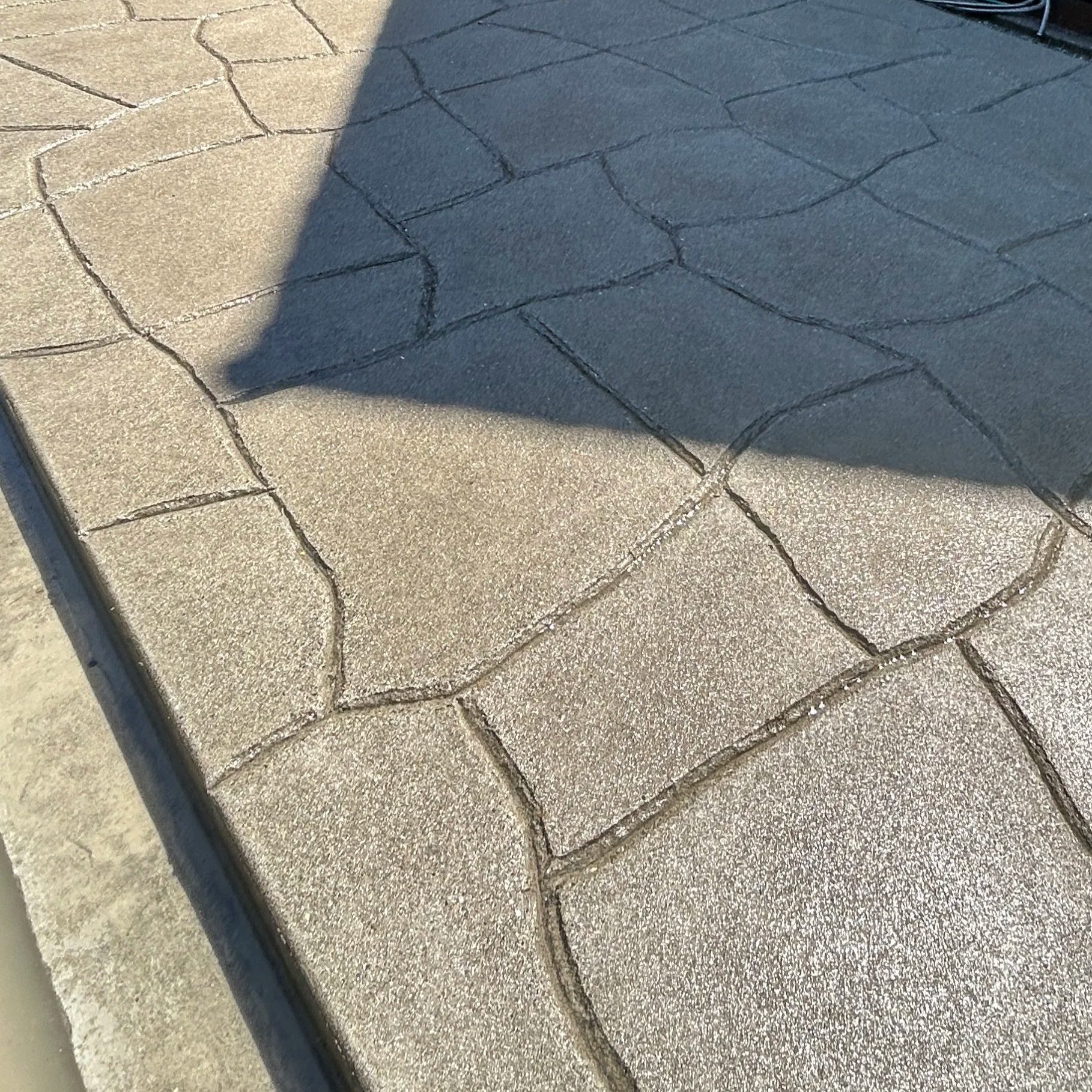
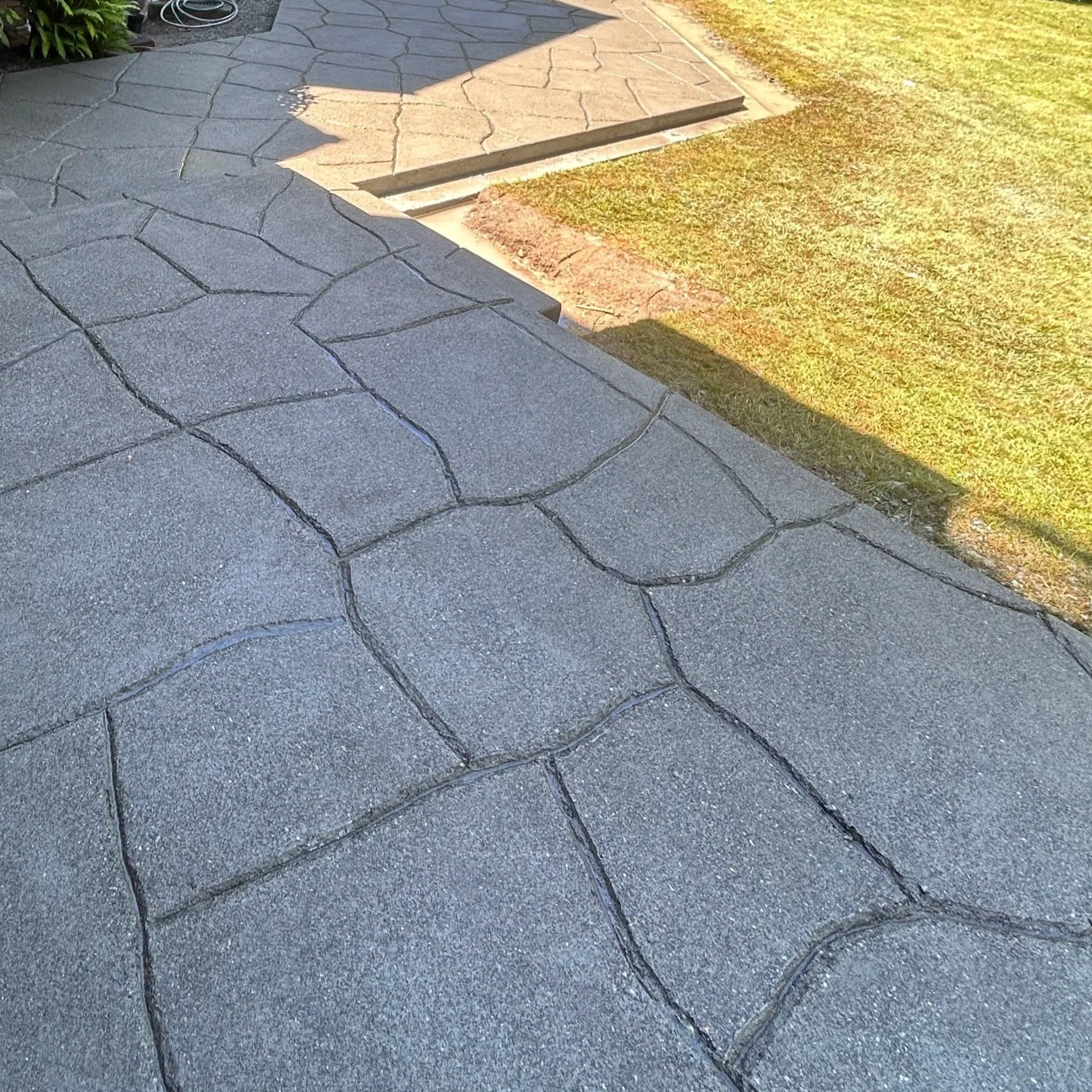
Our team got creative in extending and replicating an existing century-old patio, using custom-made stencils and stamps to recreate the faux-flagstone tooling pattern.
Phase 1: Replicating the Layout
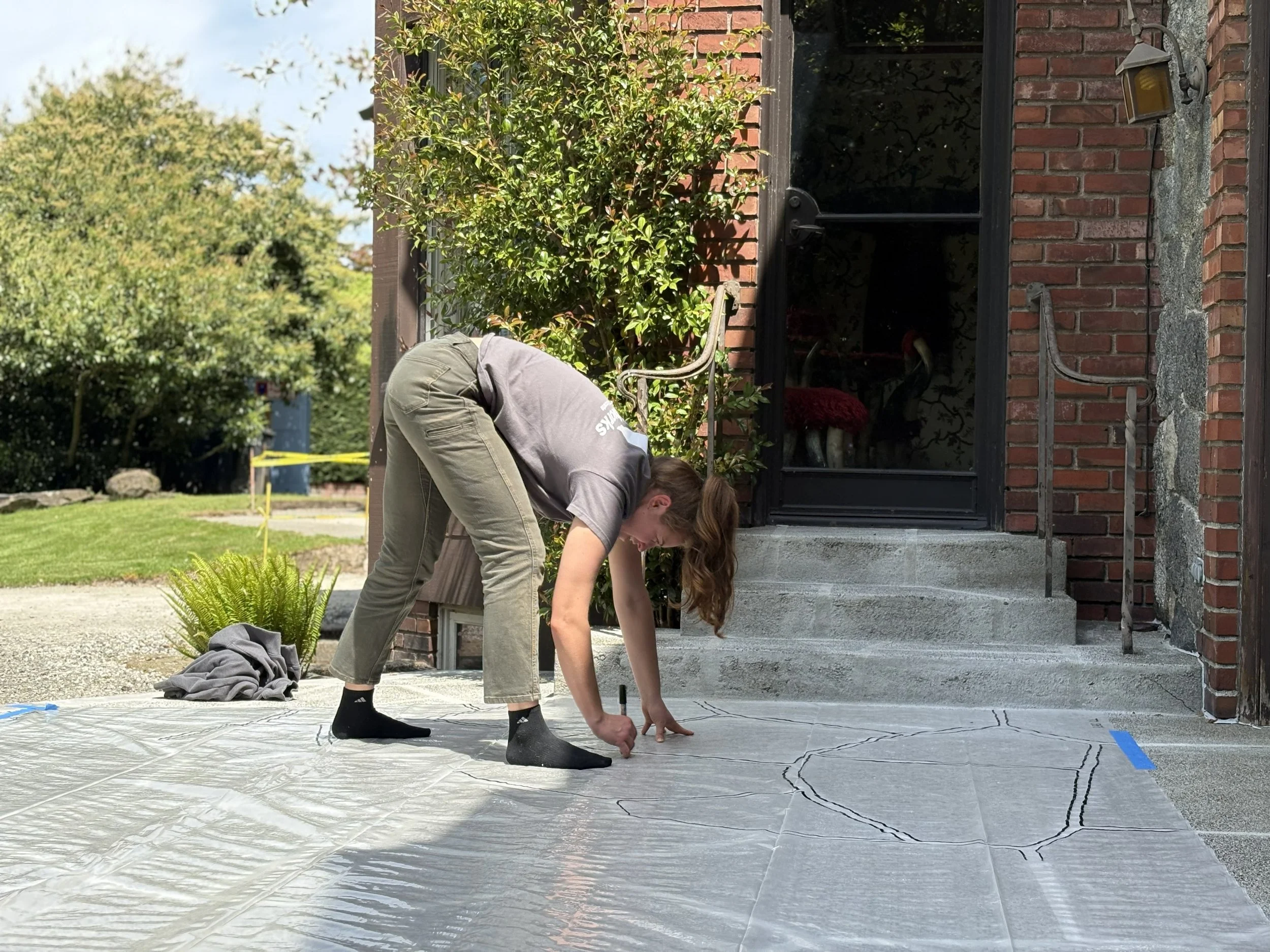
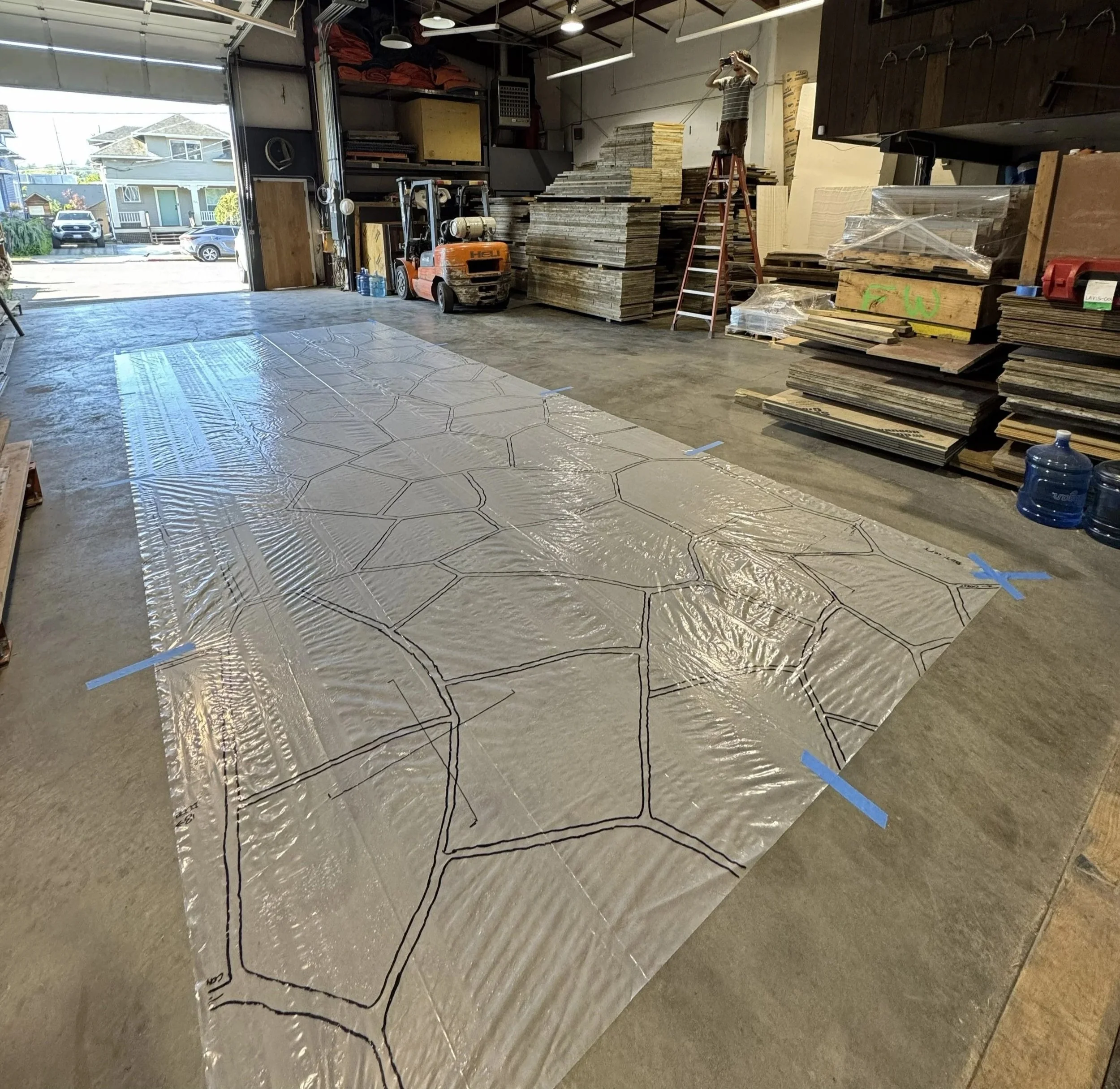
For the extension, the team first needed to capture the geometry of the existing patio. Fieldworks Director Liz Tapler and Project Engineer Max Pleskoff began by laying out a 10’ x 25’ sheet of plastic and tracing all existing trowel lines. Max then laid out the full-scale tracing of the patio on the Fieldworks shop floor and photographed it from a ladder. Using Photoshop and Revit, he created a 1:1 digital drawing. From there, Liz and Max selected three areas of the patio that best captured the essence of the historic patio. In deciding which stones to emulate, they examined the amount of visual repetition when the shape was rotated to avoid the patio from looking too curated. They also determined a rough module for the stones to be somewhere around two feet. The two-foot module was then applied to each edge of the stamps, allowing them to be rotated to create a myriad of possible pattern outcomes.
Phase 2: Creating the Stencils
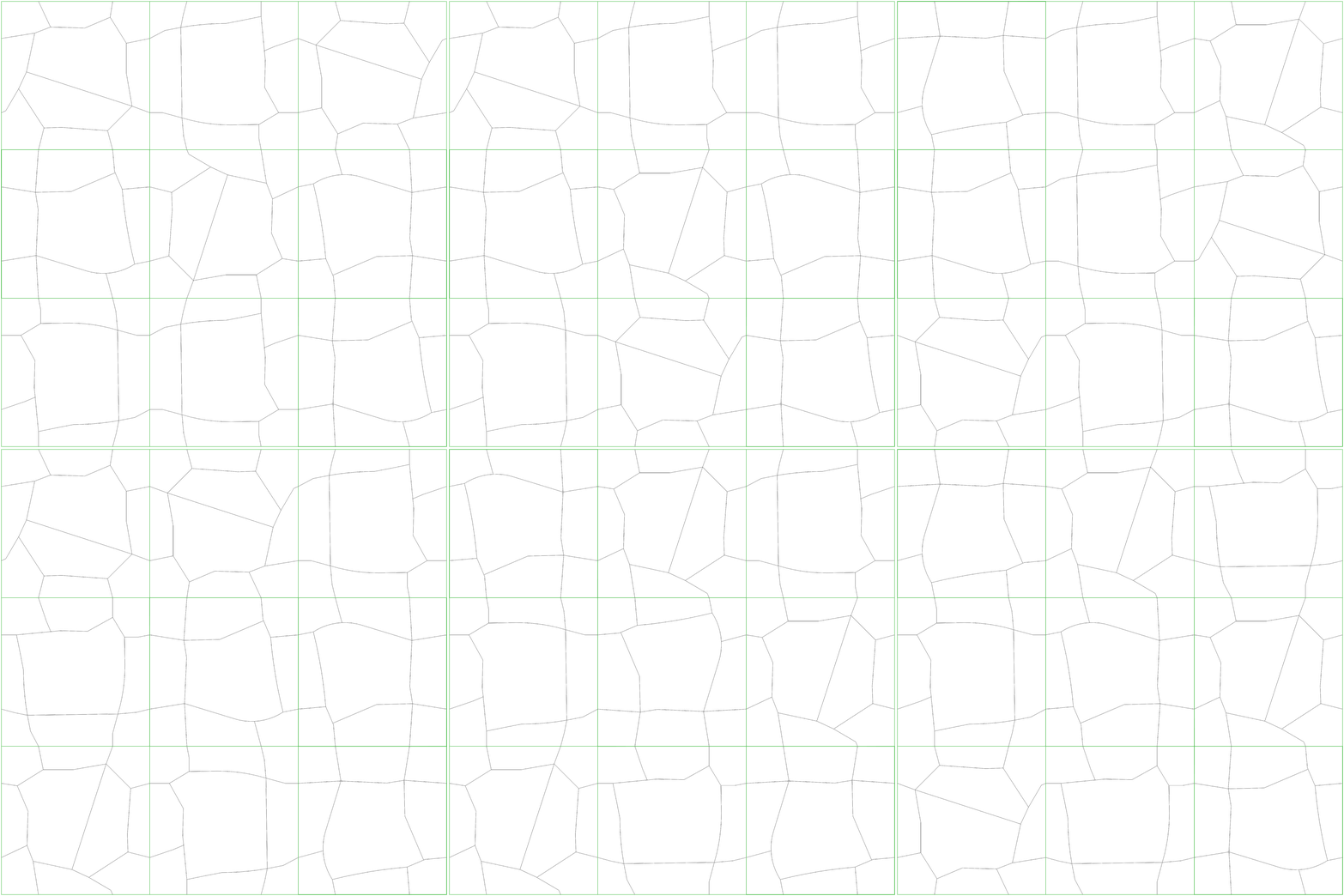
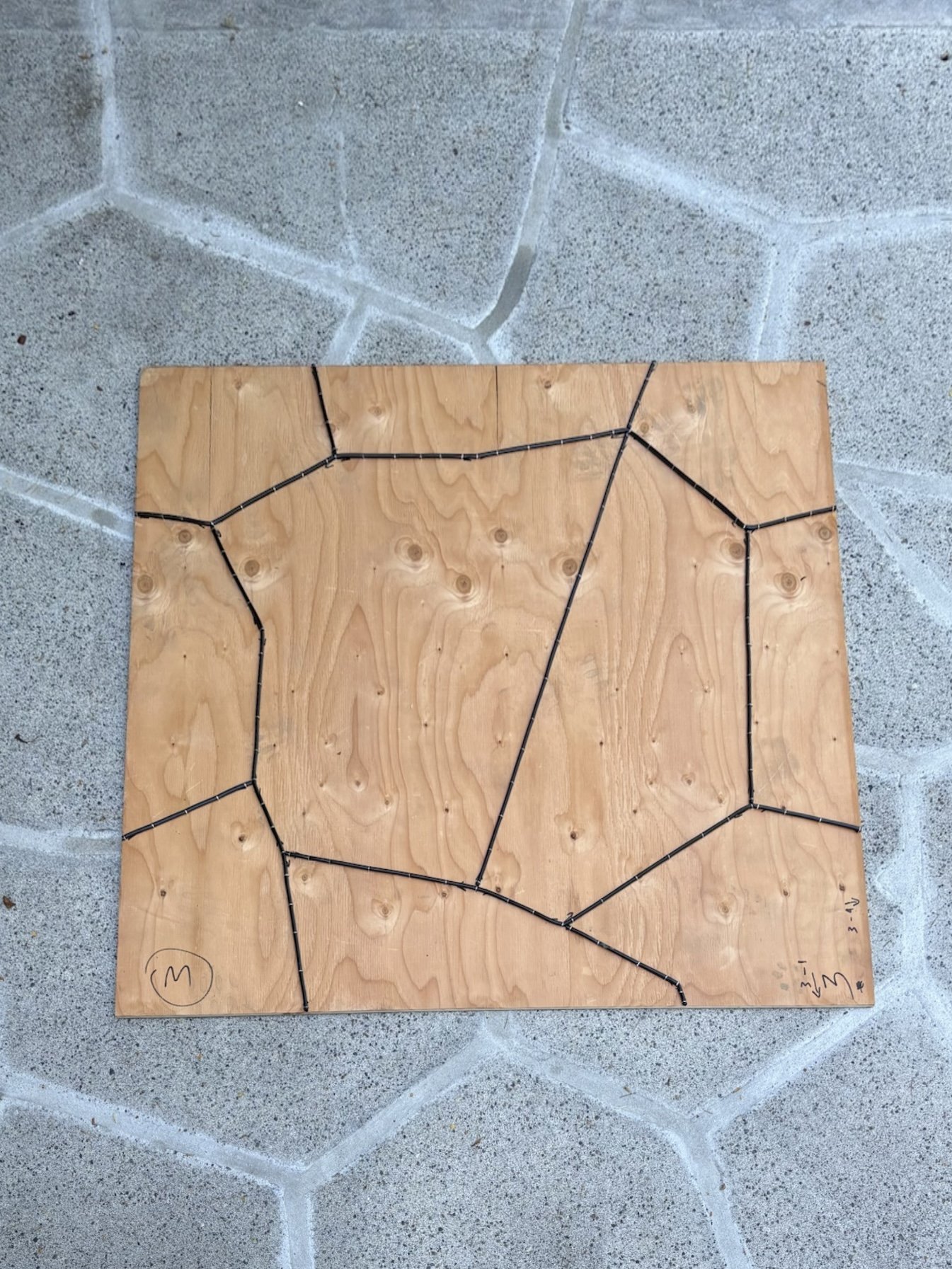
Concrete stamps are typically created using rubber in order to make a full impression on the wet concrete. Oftentimes, stone stamps will feature a textured field to emulate the unique ways natural stones are cut or chipped. The team’s goal was to replicate what they presumed to be an acid-etched patio, which predates rubber stamping by a half-century. With this in mind, the team aimed for the stamps to only impress the edges of the “stone” modules. Through some research, they found the best solution to be a stiff plastic cable material that was stapled to plywood.
Phase 3: Pour Day
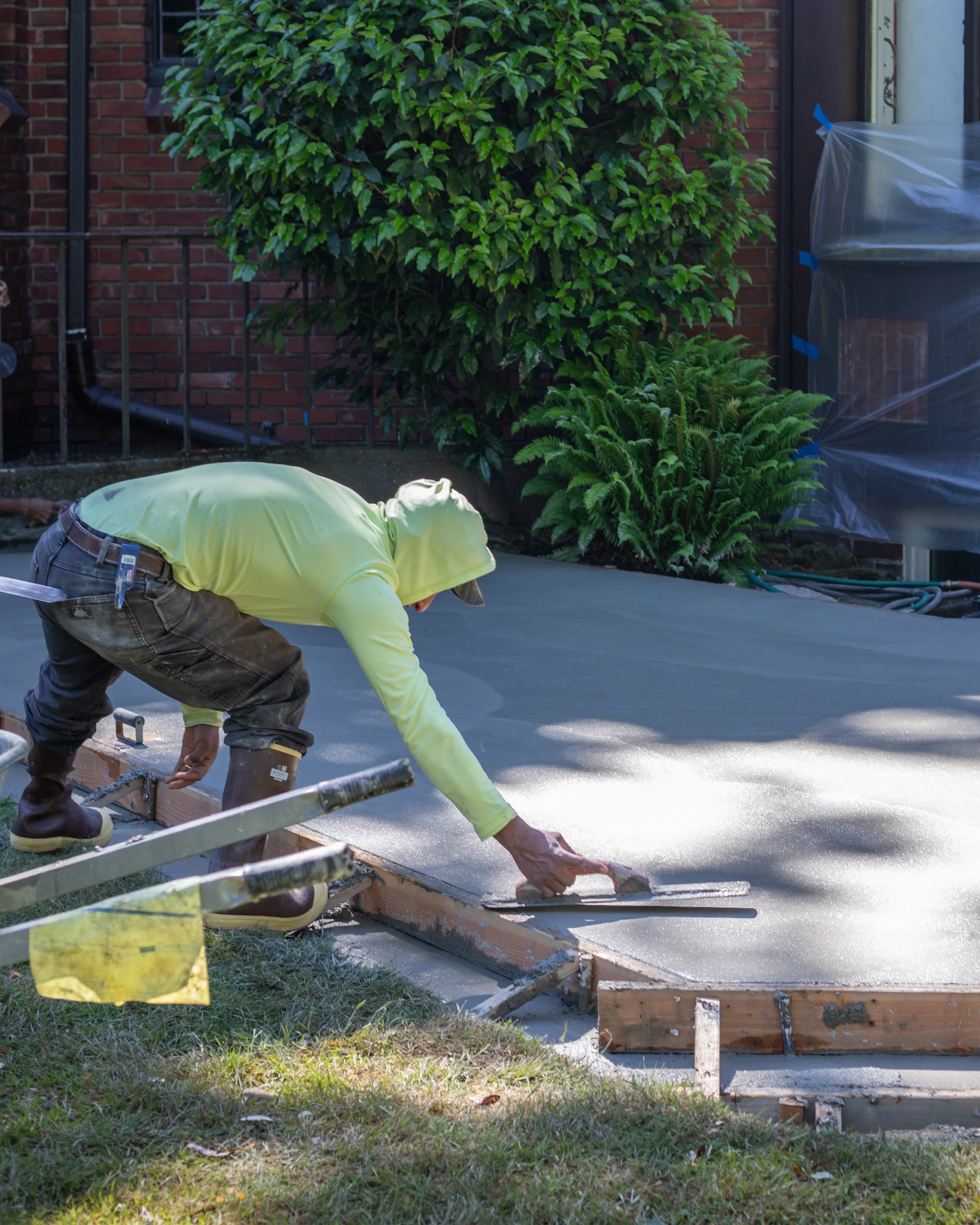
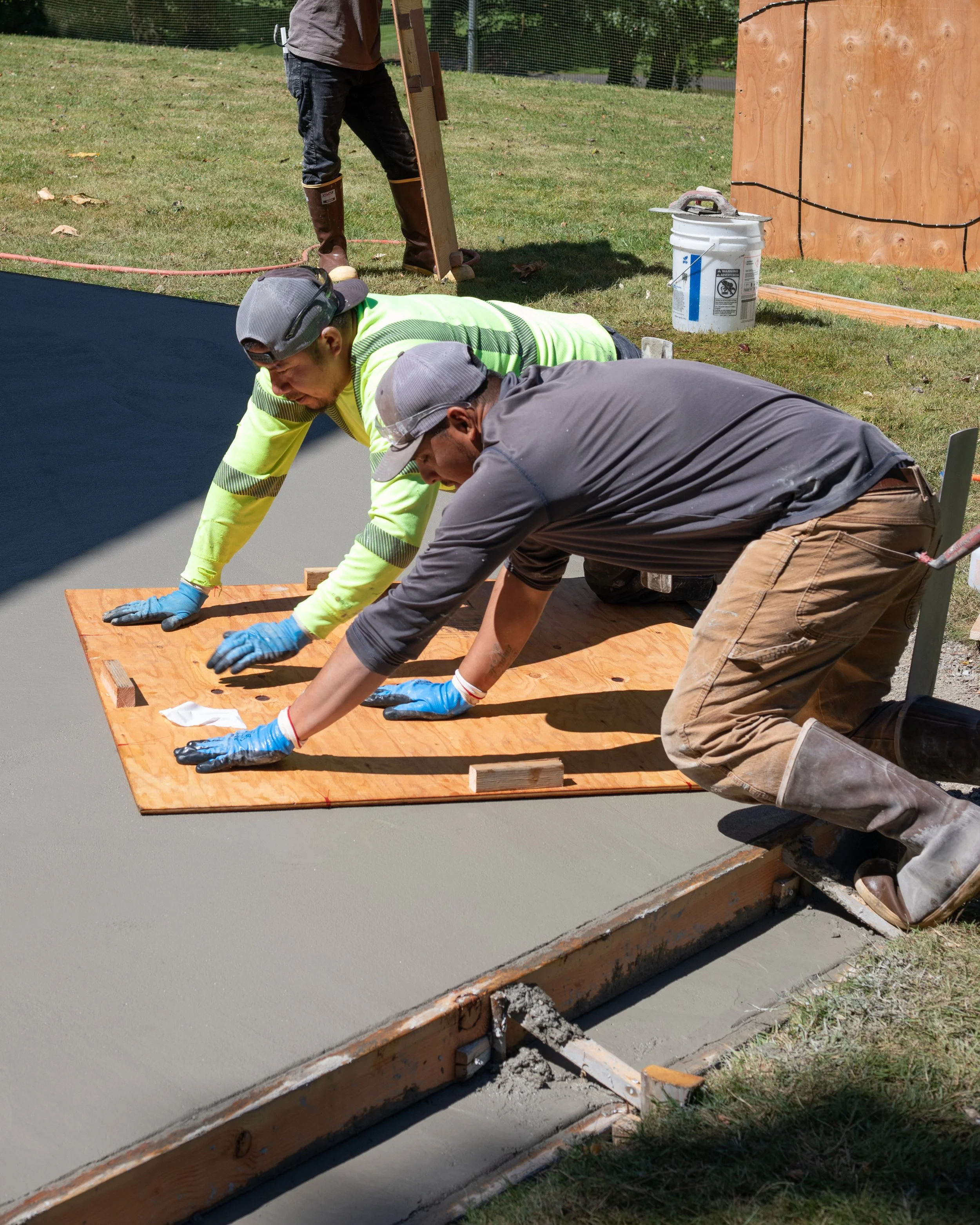
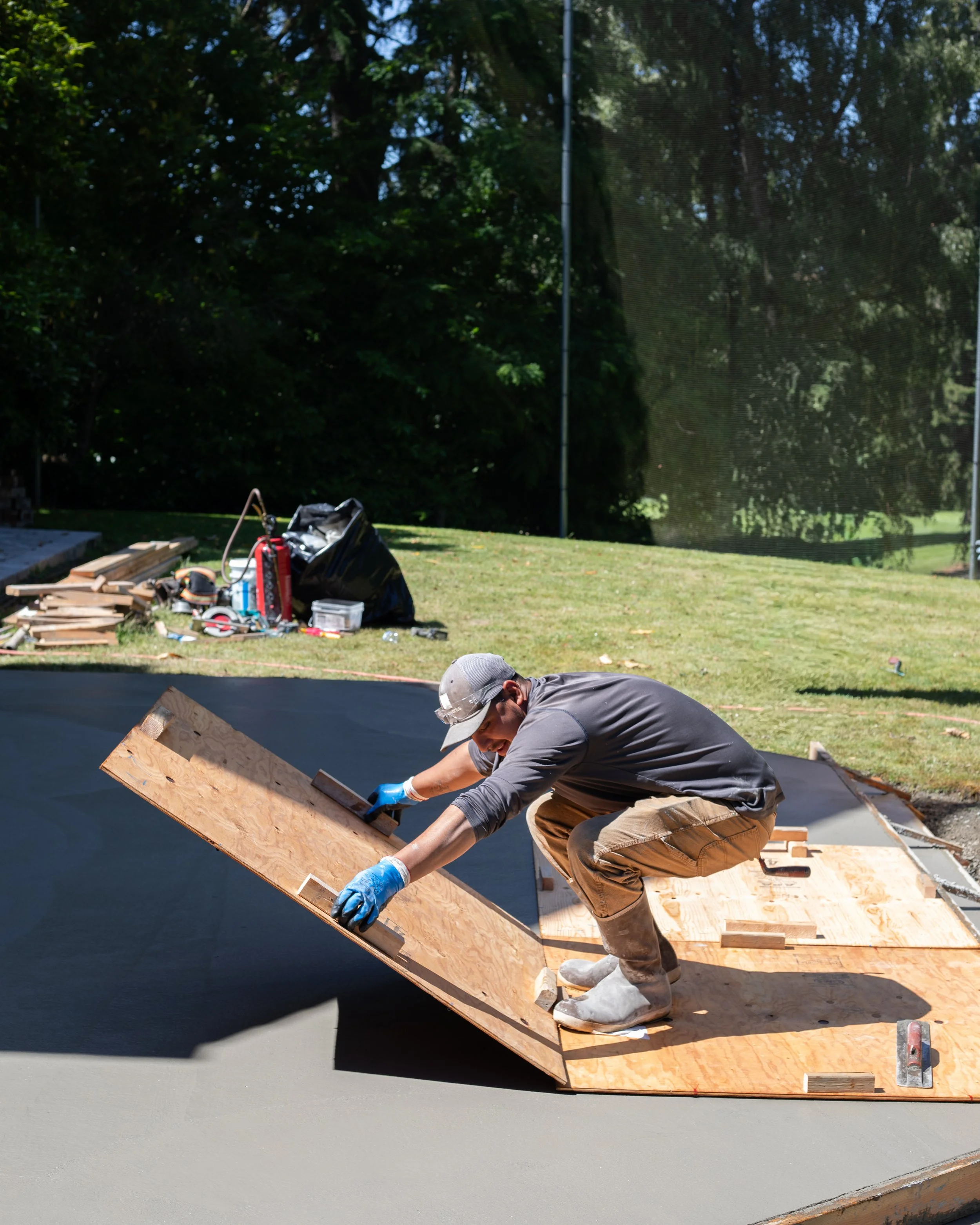
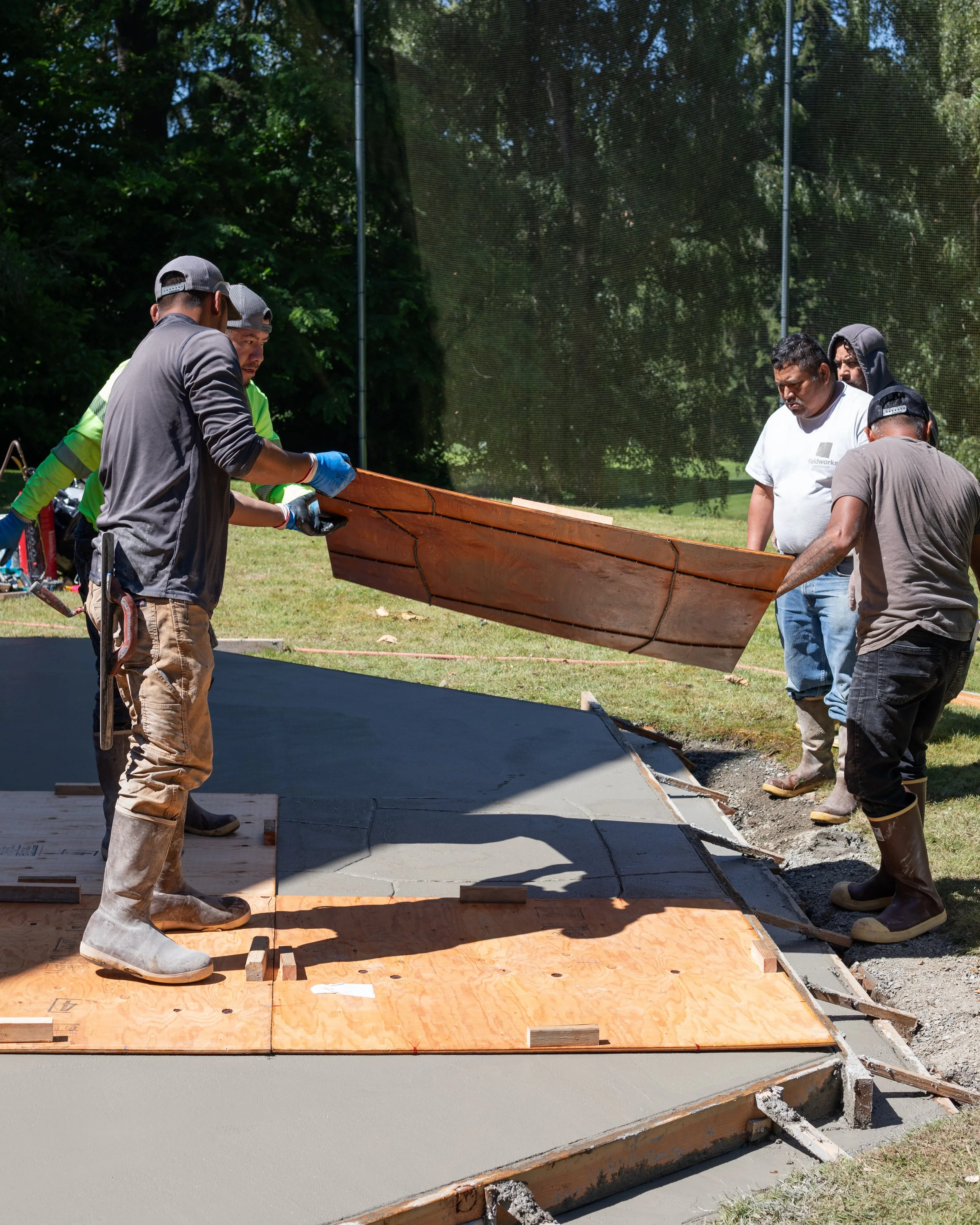
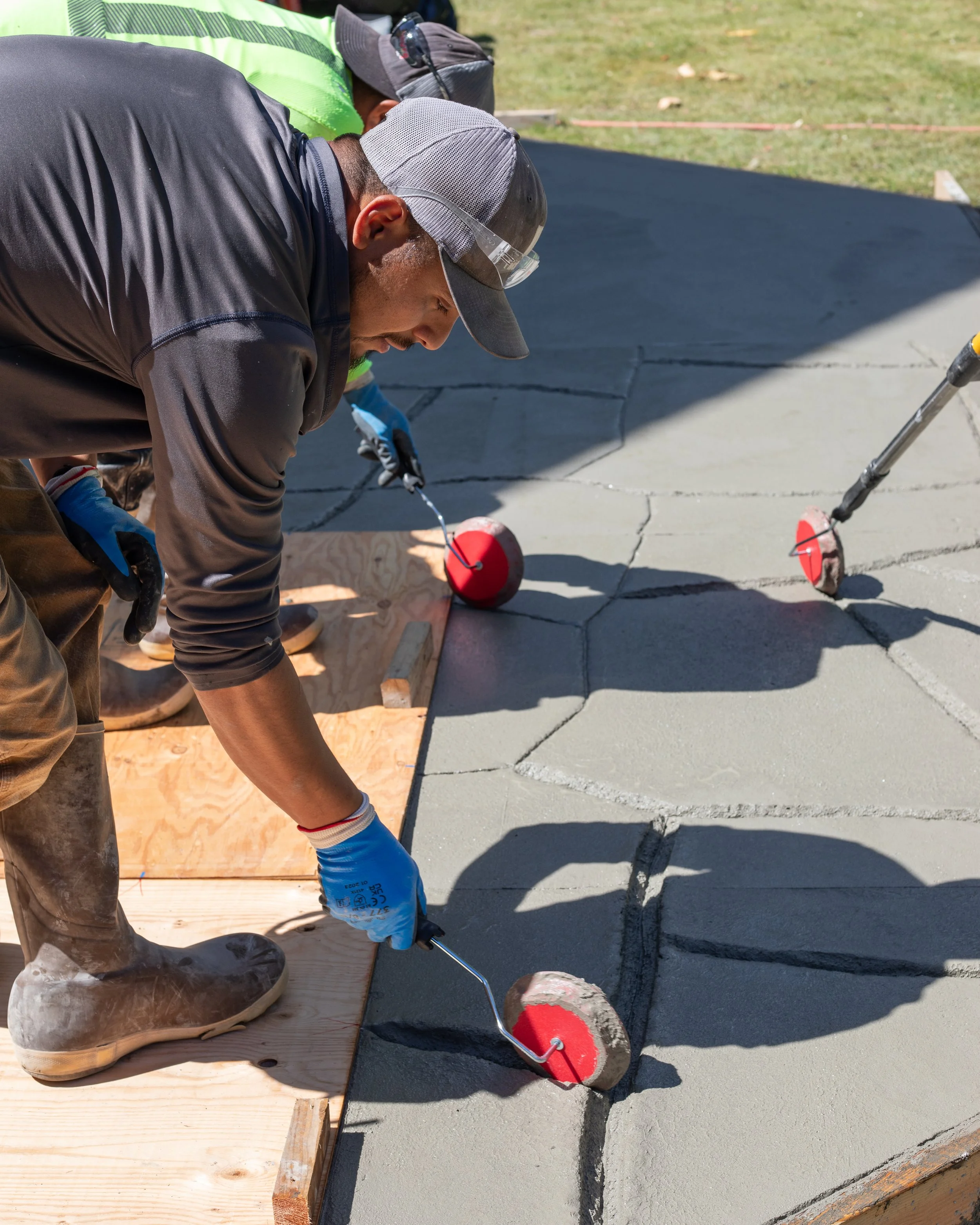
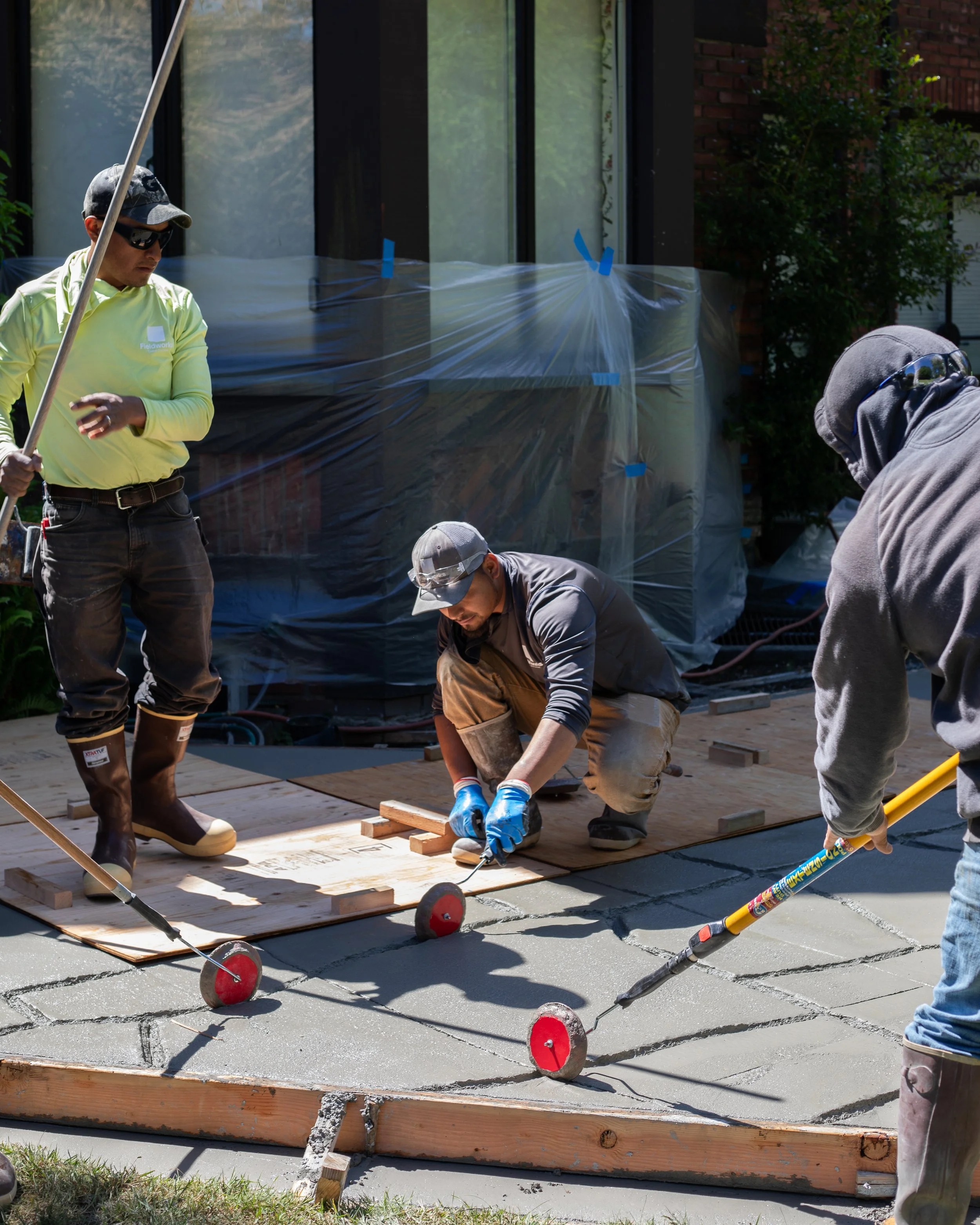
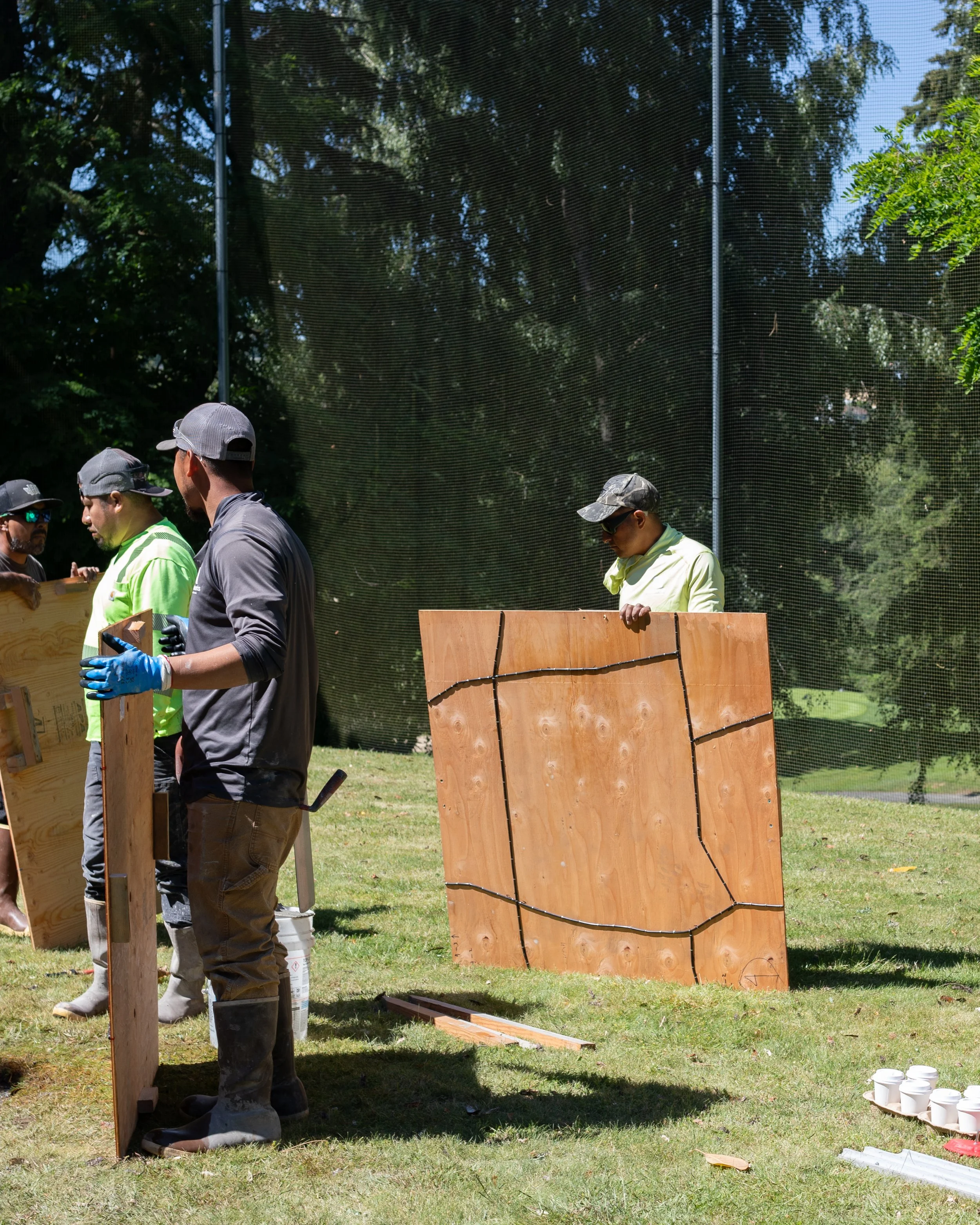
The pour day was incredibly well-orchestrated. The team poured and floated a standard patio mix, waiting until the concrete had entered the perfect (and brief) window of time for stamping. They laid the stamps lightly on top of the slabs, rotating and interchanging which stamps interfaced with each other to eliminate a repetitive pattern. While half the crew stamped, the other half followed behind with specialized stone rollers to enhance the gap between the “stones”.
At the edges of the patio and points where the new slab interacted with the existing geometry, the team worked to align the stone edges to appear as though they fit between walls or connected to existing stones—ultimately creating a truly custom product. The team also examined existing steps in the patio to mimic the conditions of the new steps poured. Vertical trowel lines at the stair risers suggest monolithic stone construction.
Timing was key, as the crew waited for the freshly poured concrete to firm up enough before applying the chemical finish and washing of the slab to ensure the troweled lines were retained—mimicking the deep etching to expose the aggregate in the mix. The scope will be completed with matching grout to the existing patio, resulting in a seamless expansion just in time for summer.